Ground-Mounted Solar Panels Lincolnshire

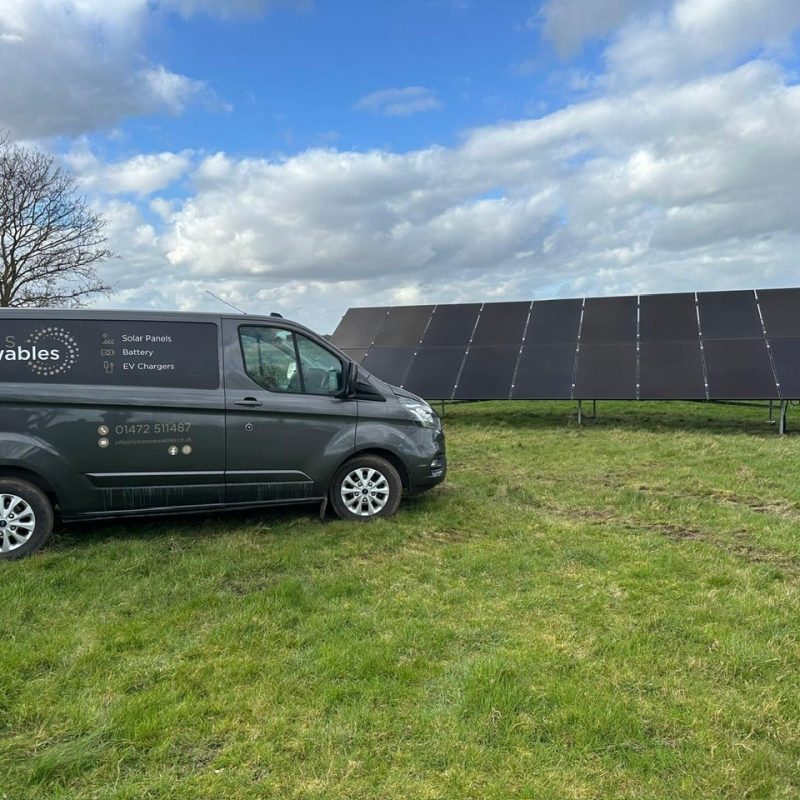
At Lincs Renewables, we design and install bespoke ground-mounted solar panel systems throughout Lincolnshire and East Yorkshire.

When considering solar panels, many people may first think of roof-mounted solar panels, yet they’re not suitable for every project. If roof space is unsuitable or limited, the surrounding lands could provide an ideal alternative.
When considering solar panels, many people may first think of roof-mounted solar panels, yet they’re not suitable for every project. If roof space is unsuitable or limited, the surrounding lands could provide an ideal alternative.
What You’ll Gain from Ground-Mounted Solar


  • Optimise Positioning: A ground-mounted system offers greater flexibility to optimise the position and angle to support strong year-round generation.
  • Easier Access and Maintenance: Often, when panels are installed at ground level, they are easier to keep an eye on, inspect, clean, maintain and repair.
  • More Space to Utilise: Where roof size is limited, you may be able to accommodate more panels on the ground, achieve a higher yield and generate more energy.

What are Ground-Mounted Solar Panels?


Ground-mounted solar panels work in exactly the same way as roof-mounted solar panels. They convert daylight into clean, renewable electricity to run your business or home, reducing reliance on the traditional grid and allowing you to save money.

Instead of being secured to a building, the panels are installed on a purpose-built framework anchored directly into the ground. This makes ground-mounted solar the perfect solution for properties with large gardens, paddocks or unused land, roofs that face in an unsuitable direction, limited or heavily shaded roof space, as well as high electricity requirements.

Ground-Mounted Solar vs Roof-Mounted Solar: What’s Best for Your Needs?

Feature  Ground-Mounted Solar  Roof-Mounted Solar 
Positioning  Can be positioned around the available sunlight  Restricted by the roof’s direction and pitch 
System Size  Can accommodate larger systems where land is available  Limited by usable roof space 
Maintenance  Generally easier to access, inspect and maintain  May require scaffolding or specialist access 
Installation Cost  Usually higher because a dedicated framework, foundations and groundworks are required  Usually lower where the existing roof is suitable 
Property Impact  Avoids attaching panels to the main roof but occupies part of a garden, field or paddock  Panels and fixings are installed directly onto the roof 
Cabling  Usually requires an underground cable route  Cabling generally remains closer to the building 
Planning  May require planning permission depending on the system’s size, position and location  Often falls under permitted development, although conditions and restrictions apply 
Protection  May be more exposed to vehicles, machinery, livestock or accidental damage  Positioned away from most ground-level activity 
Heritage Suitability May offer a more discreet and reversible option  May affect historic roofing materials and the appearance of the property

Supporting History, Maintaining Heritage

Owning a listed building, a historic building or simply a beautiful building that you wish to preserve does not mean that solar panel installation is out of reach. While roof-mounted solar is not always recommended for historic or listed building, a well-positioned ground-mounted array can offer a convenient alternative.

For historic or listed buildings, it may be necessary to opt for a “hidden in plain sight” approach when adding a ground-mounted solar system, this system can use screening methods, such as hedgerows or fencing.

Another key requirement for listed buildings is that changes are reversible. A ground mount is much easier to remove in the future without leaving a trace on the primary building. See our case study on a ground-mounted installation in Lincolnshire.

A Complete Connection


We can also manage the complete connection between the array and your property, including trenching, underground cable containment, electrical connections, backfilling and final commissioning. This means you have one point of contact throughout the entire installation.

Bespoke Solar Mounting Structures


The array may be secured using ground screws, driven piles or a ballasted mounting system. Ground screws provide a secure foundation with minimal excavation and no large concrete base, while ballasted systems may be more suitable where digging is restricted, such as on rocky or archaeologically sensitive land.

Lincs Renewables Ground-Mounted Solar Installation Options

Every site is different, and we understand that better than anyone. Your set-up will always start with a review of the area so that we can select the correct mounting system and foundations according to the size, ground conditions, exposure and intended use of the surrounding land, whether it is domestic or commercial.

Package 1

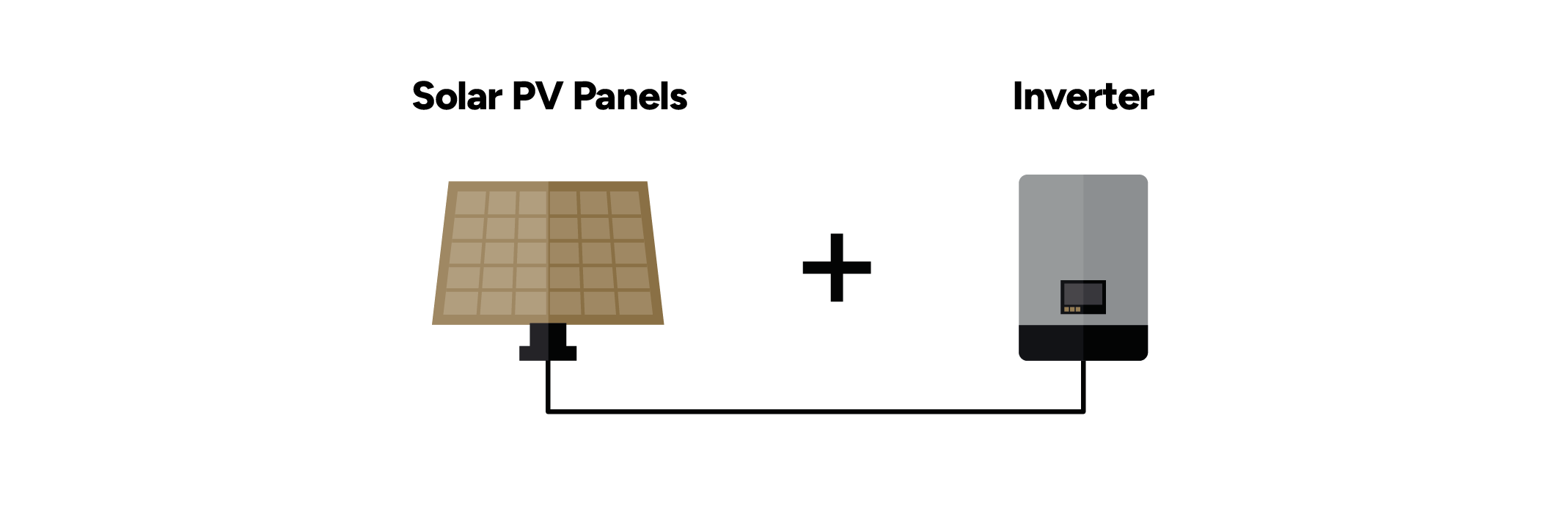
This entry-level package is ideal if you are taking your first step into ground-mounted solar. By installing a high-quality ground-mounted solar PV array and inverter, you can generate your own renewable electricity to power your home, farm or business. This can help reduce the amount of electricity you need to purchase from the grid from day one.

Illustration of solar PV panel and inverter

Package 2

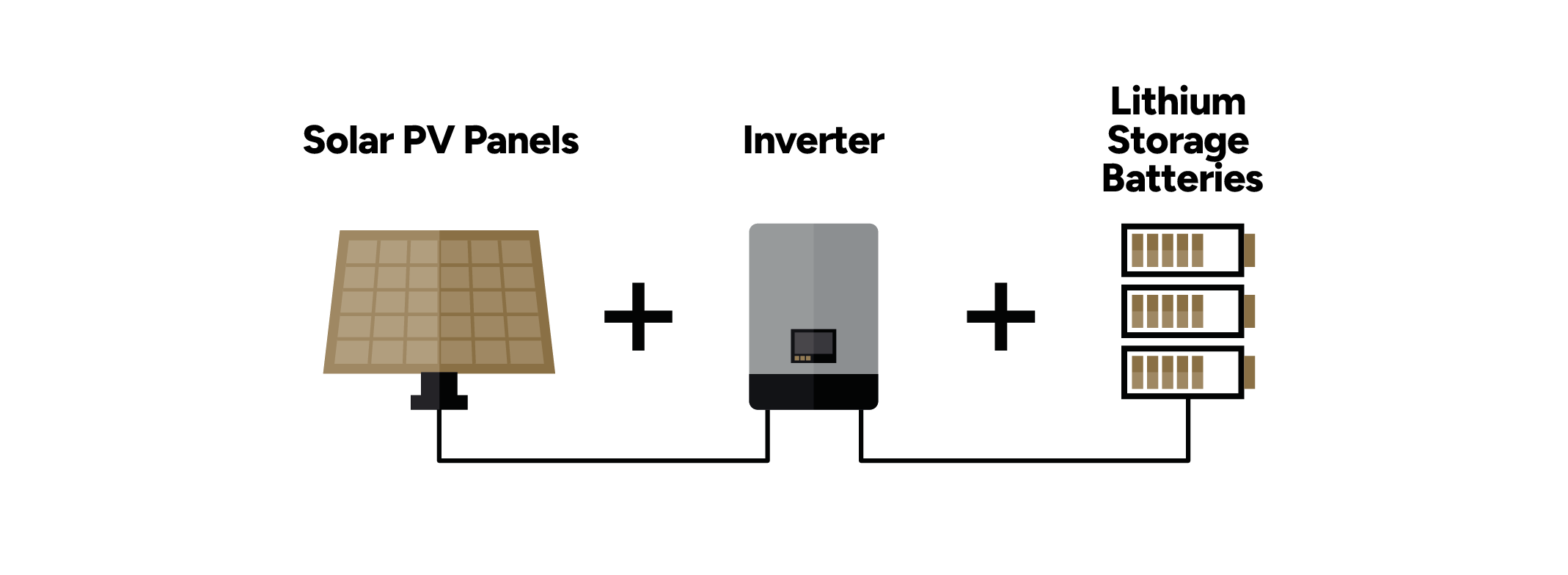
Take your energy savings further by adding battery storage to your ground-mounted solar system. Excess electricity generated by the solar array can be stored for use during the evening, overnight or when solar generation is lower. If you are on a compatible smart energy tariff, you may also be able to charge the batteries during cheaper off-peak periods, helping you manage your energy costs more effectively.

Illustration of solar panels, inverter and batteries

Package 3

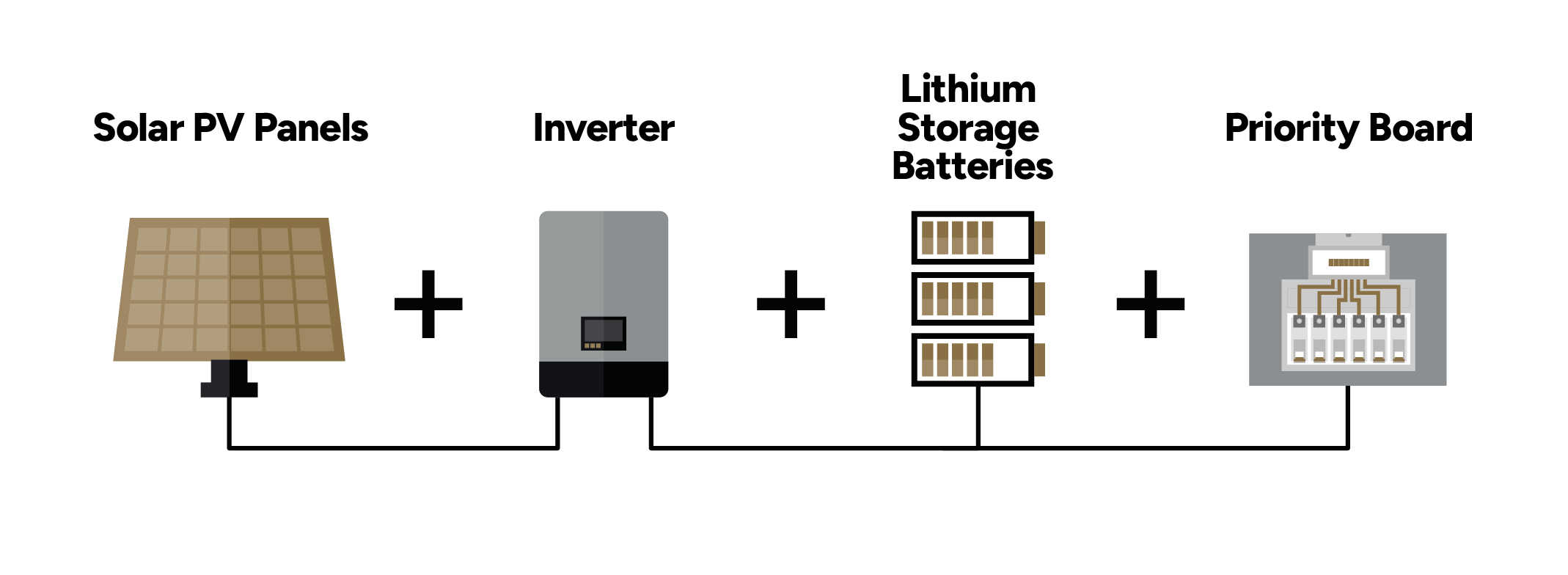
This option builds on Package 2 by adding a priority board for additional energy security. In the event of a power cut, selected essential circuits can continue to receive electricity from the battery storage system. This can help keep important appliances and equipment running, providing greater peace of mind for homes, farms and rural properties.

Illustration of solar inverter, batteries and priority board

Package 4

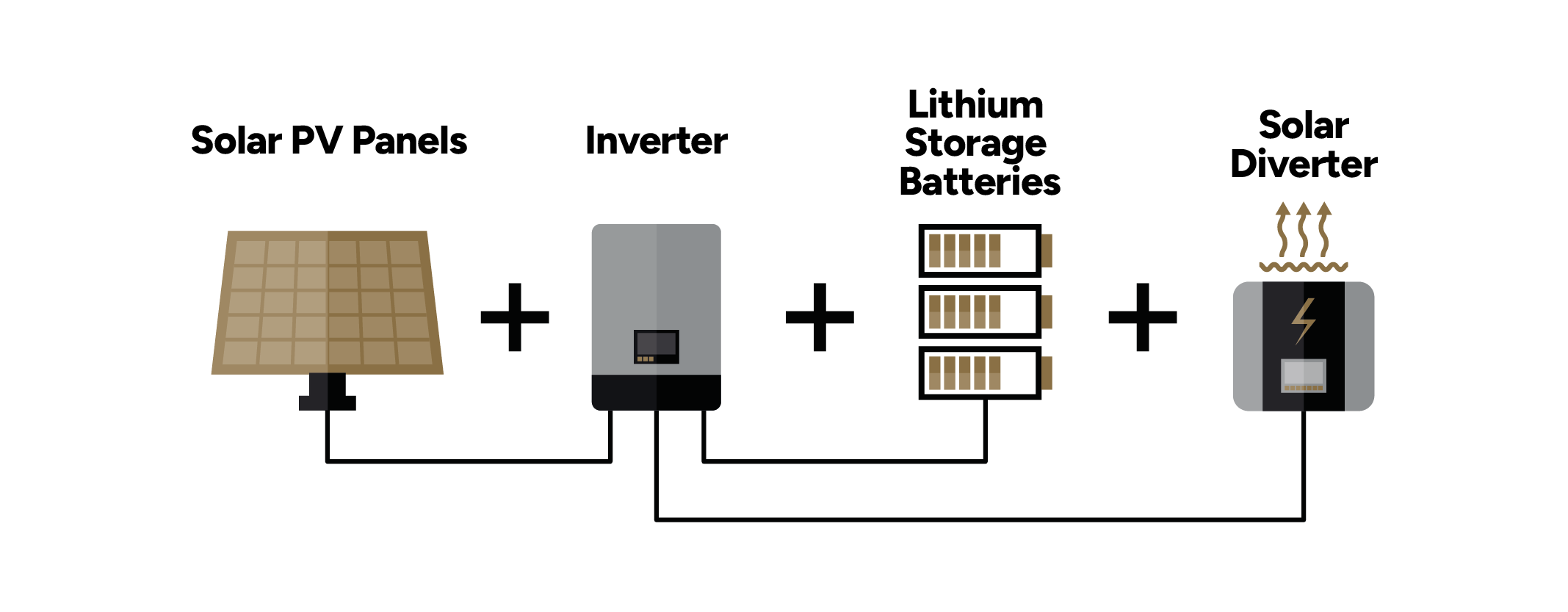
Similar to Package 2, this package includes a smart hot water diverter. Once your batteries are fully charged, surplus electricity generated by the ground-mounted solar array can be directed to an immersion heater rather than immediately being exported to the grid. This allows more of your renewable electricity to be used within the property while reducing demand on your conventional hot water system.

Illustration of renewable energy home system

Package 5

The complete renewable energy package for a home, farm or business. This option combines a ground-mounted solar array with battery storage, a hot water diverter and a compatible EV charger. Surplus solar electricity can be stored, used to heat water or directed towards charging an electric vehicle, helping you make greater use of the energy generated on your land.

Illustration of renewable energy home system

Contact us today to discuss your requirements and arrange a free no-obligation quotation, or download your free solar guide!

OUR INSTALLATION PROCESS

We’ve streamlined every step, so you know exactly what to expect:

1

Get a Quote

Start by getting in touch for a free, no-obligation quote. We’ll take the time to understand your property, available land, energy usage and long-term goals so that we can recommend a suitable ground-mounted solar solution.
2

Initial Consultation & Site Assessment

We’ll assess the proposed installation area, including the available space, shading, ground conditions, access and distance from the main property. We’ll also consider the intended use of the surrounding land, any nearby buildings or trees and the most suitable route for underground cabling.
3

Custom Design & Proposal

Based on our assessment, we’ll produce a system specification and clear quotation. We’ll also explain the expected generation and estimated payback period.
4

Professional Installation

Our fully accredited installers will manage the complete installation, including preparing the site, installing the foundations and mounting structure, fitting the panels and connecting the inverter and battery system.
5

Commissioning & Handover

Once installation is complete, we’ll test the full system to make sure everything is operating safely and efficiently. We’ll show you how to use and monitor your system.
6

After-care & Monitoring

Our support does not end once your system is switched on. We provide ongoing advice, monitoring, maintenance and servicing to help keep your ground-mounted solar installation operating efficiently and trouble-free.

Serving the Region

Our MCS-approved solar installers provide ground-mounted solar systems for homes, farms, smallholdings and businesses throughout Lincolnshire and East Yorkshire, including:

If you’re unsure if we cover you, just get in touch. We’re often happy to extend services across the region.

Ready to Take the Next Step?

Turn unused land into a reliable source of clean, renewable electricity with a system designed around your property. Get in touch today to request your free, no-obligation quote, our download our solar guide to learn more about solar energy.

FAQs about Ground-Mounted Solar Panels

Are ground-mounted solar panels more efficient?

The panels themselves work in the same way as roof-mounted solar panels. However, a ground-mounted system can be positioned at an appropriate orientation and angle rather than being restricted by the existing roof.

Open airflow around the panels can also help reduce heat build-up. The overall performance will depend on the location, shading, panel specification and system design.

Do I need planning permission for ground-mounted solar panels?

Not always. Some stand-alone domestic solar installations qualify as permitted development when they meet all applicable limits and conditions.

However, the permitted development size limit is relatively small, so many multi-panels ground arrays will require planning permission. Additional restrictions apply to listed buildings, scheduled monuments, conservation areas and some designated land.

You should confirm the requirements with your local planning authority before installation.

Can I install ground-mounted solar at a listed building?

Potentially, but the location and design must be considered carefully.

Ground-mounted solar may avoid making physical changes to the historic roof or building. However, the effect on the setting of the listed property must still be assessed, and the installation may require planning permission or listed building consent.

How much land do I need for ground-mounted solar panels?

The amount of land required depends on the number and size of the panels, their angle, the layout of the rows and the space needed to prevent shading.

We will assess your electricity requirements and available land before recommending a suitable system.

Can ground-mounted solar panels be combined with batteries?

Yes. Battery storage can be installed alongside a ground-mounted solar system to capture excess electricity for use later.

The inverter and batteries can usually be located in a garage, utility room, plant room or suitable outbuilding.

How are ground-mounted solar panels secured?

Depending on the site, panels may be installed using ground screws, driven piles, ballasted foundations or another engineered mounting solution.

The foundations will be selected according to the soil, wind exposure, array size and any restrictions on excavating the land.

How is the solar array connected to the property?

Protected electrical and communication cables are normally installed underground between the ground-mounted array and the property.

Lincs Renewables can manage the trenching, cable containment, electrical connection, backfilling and final commissioning as part of one complete installation.

Can animals graze beneath ground-mounted solar panels?

Small livestock, such as sheep, may be able to graze around some ground-mounted arrays.

The installation must provide suitable clearance and protect cables and electrical equipment from damage. We will consider the intended agricultural use when designing the system.

Are ground-mounted solar panels easy to maintain?

They are generally easier to access than roof-mounted panels because scaffolding or specialist height-access equipment is not normally required.

The surrounding vegetation will still need to be controlled, and the panels, framework and electrical equipment should be inspected periodically.

How long does a ground-mounted solar installation take?

The installation time depends on the size of the system, foundation method, cable distance, ground conditions and whether planning permission is needed.

Once any necessary approvals are in place, we will provide a clear installation schedule as part of your proposal.

Not found the answer you were looking for? Have a look at our full list of commonly asked questions, or get in touch with our friendly team.