


If you’re thinking about installing solar panels, one of the first questions you may have is: how many solar panels do I actually need?
Most UK homes will typically need a system of around 6-14 solar panels, although the precise number will be influenced by factors such as your specific annual electricity consumption, the wattage of your panels, the roof space available, and shading.
Rather than sizing a system by panel count alone, it is useful to start with your annual electricity consumption in kWh, work out an appropriate solar PV system size in kWp and then determine how many panels are required to reach that capacity.
So, how do you work out how many solar panels you need for your home or business? In this guide, we’ll look at kWp and kWh, how to calculate how many panels you may need and other considerations you may have.
Solar Panels, Wattage, kWp and kWh; What’s the Difference?
• Panel Count: this is the number of individual solar panels installed.
• Panel Wattage: the rated power output of an individual panel. For example, a 450W panel is rated at 450watts under standard test conditions.
• kWp (Kilowatt-peak): the rated peak capacity of a solar PV system. For example, 10 x 450W panels gives a system size of 4.5 kWp.
• kWh (Kilowatt-hours): a measure of electricity used or generated over time. Your annual household electricity consumption is measured in kWh.
Panel wattage matters because the same number of panels can produce system capacities, for example:
10 panels x 400W = 4,000W = 4 kWp
10 panels x 450W = 4,500W = 4.5 kWp
Here, the kWp figure describes the system’s rated peak capacity. It does not, however, mean the system will generate that amount of electricity every hour or every year. Actual generation figures are influenced by factors such as roof orientation, pitch, and the amount of shading or sunlight hours the roof gets.
How Many Solar Panels Do I Need for My Home?
A good starting point for estimating how many solar panels you need is your annual electricity consumption, but that only paints part of the picture. You will also need to consider factors such as roof orientation and angle, shading from trees and other buildings, and the wattage of your panels.
As a broad illustration using 850-1,100 kWh per kWp annual generation range and 450W panels.
| Annual electricity use | Indicative system size* | 450W panels | Approx. annual generation |
| 2,000 kWh | 2–2.5 kWp | 5–6 | 1,700–2,750 kWh |
| 2,500 kWh | 2.5–3 kWp | 6–7 | 2,125–3,300 kWh |
| 3,500 kWh | 3.5–4 kWp | 8–9 | 2,975–4,400 kWh |
| 4,500 kWh | 4.5–5 kWp | 10–12 | 3,825–5,500 kWh |
| 5,000 kWh | 5–6 kWp | 12–14 | 4,250–6,600 kWh |
*Indicative system sizes are rounded as starting points rather than precise recommendations. The final system size should be based on the property’s electricity use, available roof space and expected generation.
Ultimately, for most homeowners, the aim isn’t necessarily to install as many panels as possible. Instead, the ideal system should provide a good balance between the above factors. The above figures are an approximate starting point, rather than definitive recommendations for the size of solar system you may need.
How Do I Calculate How Many Solar Panels I Need?
Once you know your annual electricity consumption, you can use that as a starting point to estimate the number of solar panels you need. For example, the average annual electricity consumption in North Lincolnshire is around 2,380 kWh according to the ONS; let’s say that household is considering 450W solar panels.
To figure out the system you would need, you’d need to figure out what kWp you need. So, let’s say you’re working with a modest potential generation of 850 kWh per kWp annually, you’d divide that figure by your total electricity consumption (2,380 kWh) to get the kWp necessary for your system:
2,380 kWh ÷ 850 = 2.8 kWp
From there, you can use the kWp figure to estimate roughly how many panels you need to cover your electricity consumption. So, for a 2.8 kWp system, using 450W panels it would look like this:
2.8 kWp ÷ 0.45 = 6.2 panels
So, this household would require 7 panels, rounding up to ensure its annual electricity consumption is fully covered.
However, it’s important to remember that annual consumption provides the starting point; the proposed system size then needs to be checked against the property’s solar energy generation potential, usable roof space and then panel specifications.
What Are the Key Considerations When Installing Solar Panels on Your Home?
While your electricity consumption and available roof space are two of the biggest considerations, there are several other factors that can influence how many solar panels are right for your property.
• Annual Electricity Consumption: This is the factor that will provide you with a good basis for assessing how many solar panels you actually need. Depending on the wattage of your panels, a home with higher electricity use will require more solar panels to offset that demand.
• Panel Wattage: Higher-watt solar panels can reduce the total number of panels you need to offset your energy use. However, panels with a higher wattage also take up more space, so total available roof space needs to be carefully considered.
• Your Future Energy Needs: You may also want to stop and consider how your energy consumption and needs may change in the future. For example, if you are considering buying an electric vehicle or installing a heat pump in the future, these will impact your household energy demands. It’s worth considering any potential future requirements when sizing up your solar panel system.
• Your Budget and Energy Goals: The ideal number of panels will also depend on what you want to achieve from your installation. Whether you’re looking to reduce your electricity bills, increase your energy independence or make the most of your available roof space, these goals can all influence the number of solar panels that makes the most sense to you.
• Roof Position and Shading: These will affect how much solar energy can physically reach your solar panels and their expected generation. That could lead to you needing more panels to be able to meet your needs.
How Roof Space and Panel Size Affect Installation
This will largely depend on the specific type of property you live in; a terraced house and a detached one have very different roof sizes. That roof size is then potentially further reduced by features like chimneys. And then, there’s also the size of your panels to consider too; a standard modern solar panel can typically take up around 2m2.
Given that, a system requiring 10 panels would typically need around 20-28m2 of usable roof space for installation. However, a professional survey will be able to give you a precise assessment of how many panels your roof can have.
How Many Solar Panels Does a Business Need?
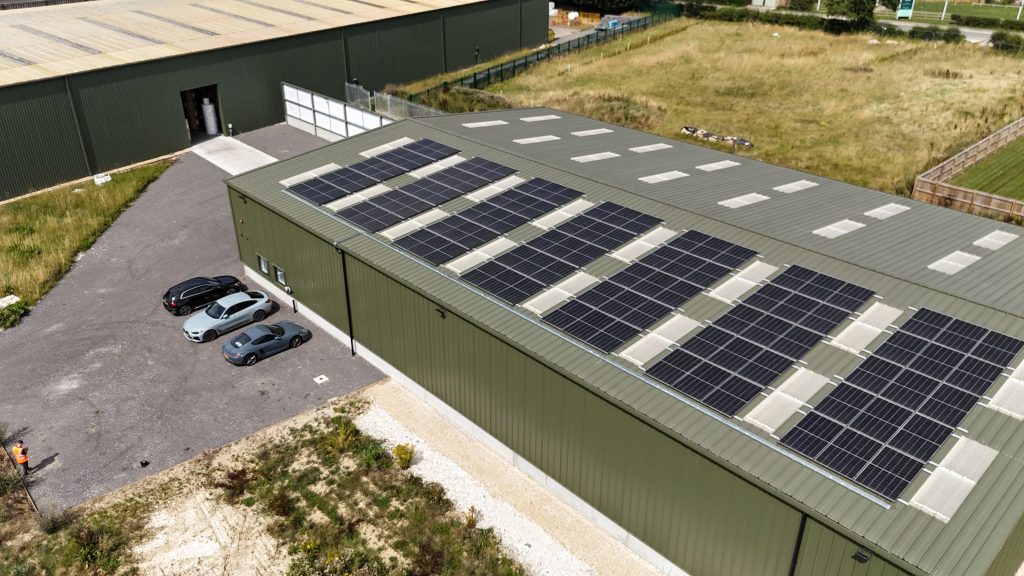
For businesses, solar PV sizing is more involved because electricity consumption, operating patterns and available roof space vary between businesses. A system for a warehouse, office or manufacturing facility may all look quite different. Commercial solar panel design therefore needs to consider these factors and strike a balance between them.
Read our guide on what size solar panel system your business needs to discover the ideal system for your business.
Is Installing Solar Panels Worth the Investment?
For many homeowners, reducing electricity costs is a major reason for installing solar panels. The financial return depends on more than just the size of the system, however.
Factors such as the cost of installation, how much solar electricity you’ll use, the offset to your bills and how much you could get for any excess energy exported back to the grid all affect the return on investment.
A larger system is not automatically a better investment. If a significant portion of your generation is exported rather than used in the home, the financial benefit of additional panels then depends on the export rate. This is why system sizing should balance your electricity consumption, available roof space, expected generation and financial objectives rather than simply aiming for the maximum possible panel count.
Do Solar Panels Increase the Value of Your Home?
Yes, installing solar panels on your home can have some influence on its value, should you decide to sell later down the road. Solar panels can help lower energy bills and improve your home’s energy performance.
To find out more about how solar panels can increase the value of your home, read our guide: do solar panels add value to your home.
Should I Get a Battery with My Solar Panels?
A solar battery can be a useful addition to your solar panel system, helping make better use of electricity generated during the day when demand is lower. Instead of exporting all of the surplus back to the grid, a battery can store it for later use.
However, whether a battery is worthwhile will depend on your energy consumption, solar generation and how you use electricity throughout the day.
Therefore, it’s worth considering battery storage alongside the size of your solar panel system, rather than as a separate decision. A professional installer can help you assess whether a battery is suitable for your property and energy requirements.
Final Thoughts
Working out how many solar panels you need is a useful starting point, but the final system should be designed around your property rather than a standard panel count.
At Lincs Renewables, we can assess your electricity requirements, available roof space and the various factors affecting solar generation to help determine a suitable solar PV system for your home. Find out more about our solar services or speak to our solar PV installers in Lincolnshire to discuss your requirements.
Contact us today for honest, professional advice and a free, no-obligation quotation.
If you’d like to find out more: get in touch, call us on 01472 511487, or email us at info@lincsrenewables.co.uk.
Contact us today to discuss your requirements and arrange a free no-obligation quotation, or download your free solar guide!
Our team of MCS approved solar panel installers cover the following areas and more across Lincolnshire and East Yorkshire:
- Boston
- Caistor
- Cleethorpes
- Gainsborough
- Grantham
- Grimsby
- Horncastle
- Hull
- Lincoln
- Louth
- Market Rasen
- Newark
