
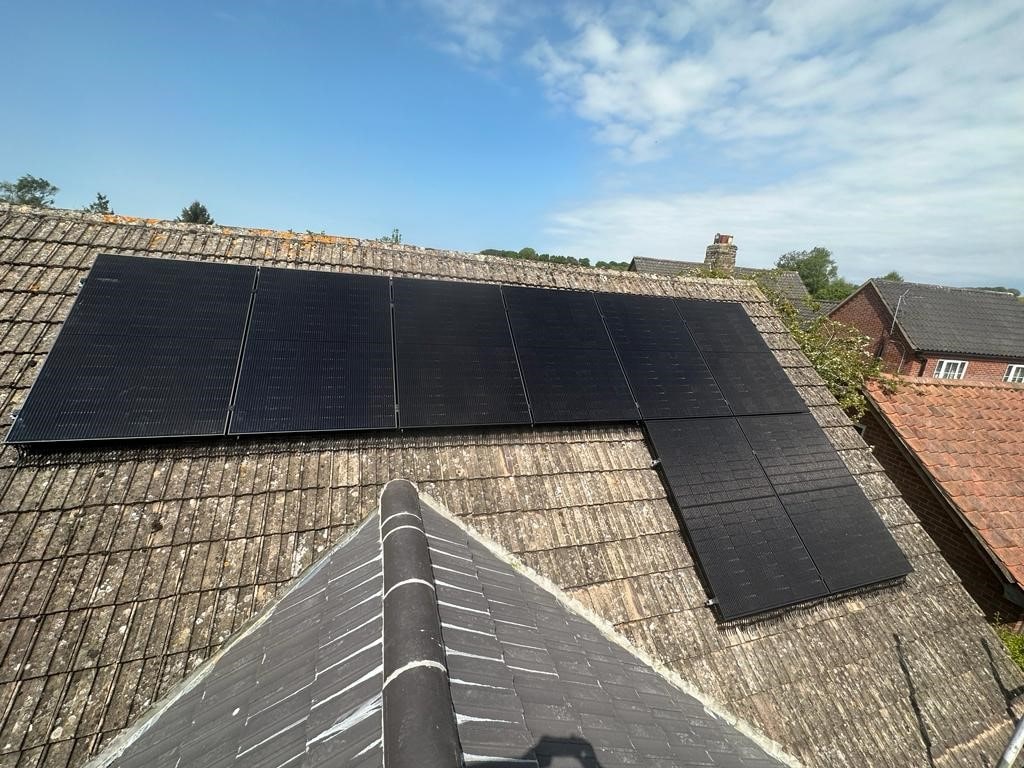

For many people, when they picture solar panels, they imagine a neat row of panels, installed on a south-facing roof, soaking up lots of glorious sunshine. While it’s certainly a nice picture, and it works for some, it’s not the only option, and it certainly isn’t the only way to generate clean, renewable energy for your home or business.
If your roof has limited space, faces an unsuitable direction or simply isn’t somewhere you want to install panels, a ground-mounted solar array could provide an effective alternative.
So, which option is best for solar panel installation?
The truth is that neither ground-mounted nor roof-mounted solar is automatically better. The right choice depends on your property, available space, electricity consumption, budget and long-term energy goals.
In this guide, we’ll take a detailed look at both options, helping you understand when a roof-mounted system may make the most sense and when it could be worth making use of the surrounding land instead.
How Do Solar Panels Work?
Whether your panels are installed on your roof or mounted on the ground, the way they generate electricity remains the same.
Solar photovoltaic panels, commonly known as solar PV panels, contain cells that absorb energy from daylight and create a direct current of electricity. This electricity is passed through a solar inverter, which converts it into the alternating current needed to power your appliances.
You can then use this electricity as it is generated. If you produce more than you need, the surplus can either be exported to the grid or stored in a solar battery for use later.
Although strong sunshine will generally increase generation, solar panels do not require constant bright sunlight. They will continue producing electricity during the cloudy conditions we regularly experience here in Lincolnshire. You may even be surprised to learn that Lincolnshire actually makes the perfect location for solar panel installation.
What Are Roof-Mounted Solar Panels?
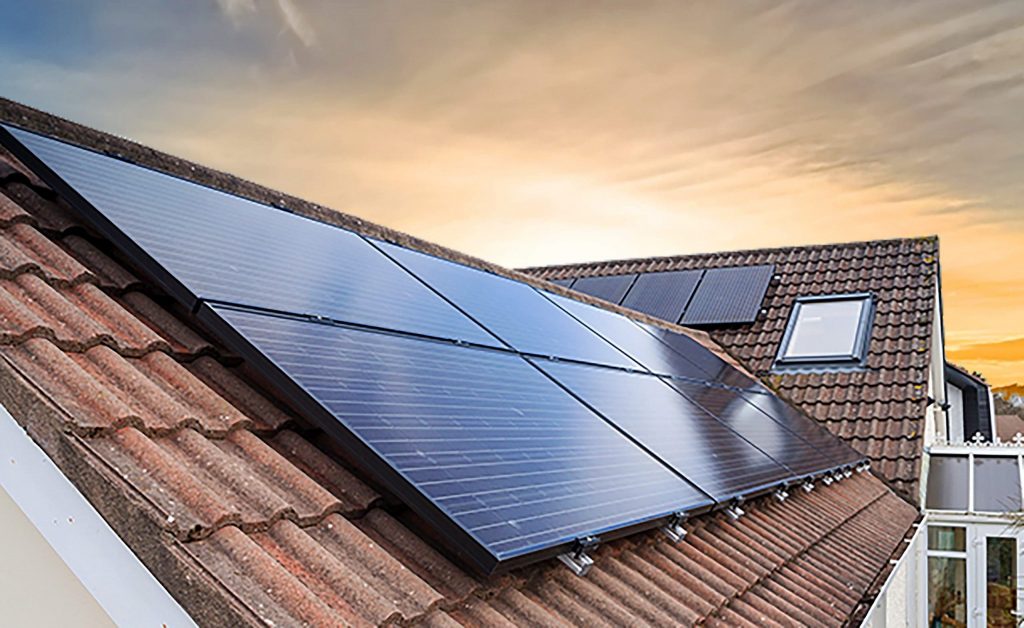
Roof-mounted solar panels are secured directly to the roof of your home, garage, extension or suitable outbuilding.
The panels are normally attached using a mounting system designed for the specific roof covering, such as tiles, slate or metal sheeting. The solar array then follows the existing direction and pitch of the roof.
Roof-mounted systems are popular because they make use of space that would otherwise remain unused. They also keep the panels above ground level without occupying any part of your garden, paddock or surrounding land.
However, the performance and size of the system will be influenced by the roof itself. Its orientation, angle, condition, shading and available surface area will all help determine what can be installed.
What Are Ground-Mounted Solar Panels?
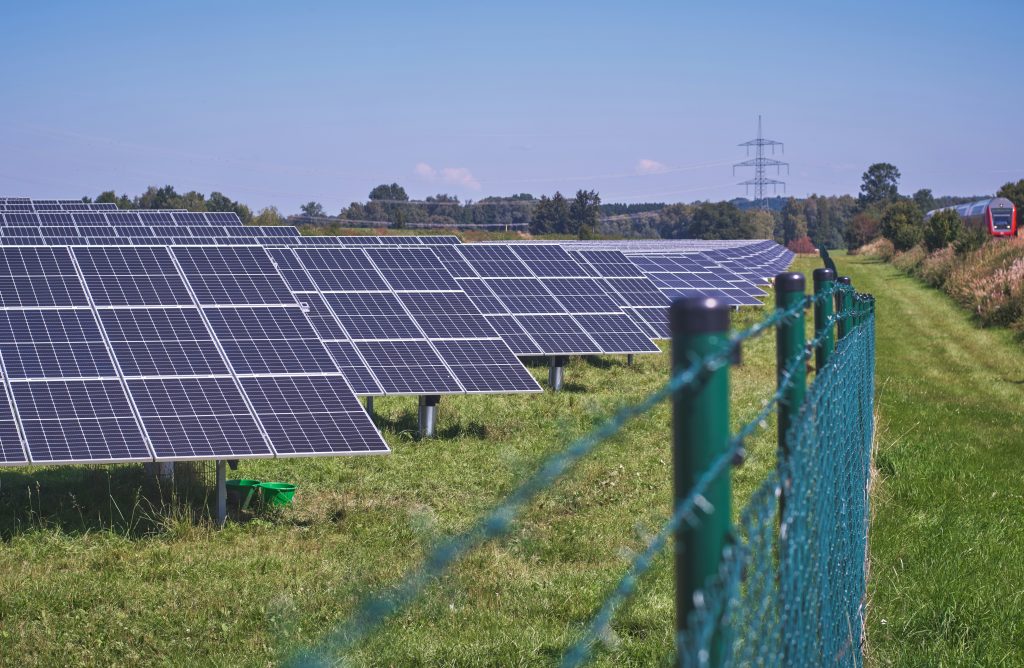
Ground-mounted solar panels are installed on a purpose-built framework anchored into the ground rather than being attached to a building.
They work in exactly the same way as roof-mounted panels but provide greater freedom over where and how the solar array is positioned. They can also offer a better alternative for historic or listed buildings.
Depending on the property and ground conditions, the framework may be secured using:
- Ground screws
- Driven piles
- Ballasted foundations
- Another engineered mounting solution
The array is then connected using protected underground cabling. This may require trenching between the panels and the property. At the planning stage, our team of experts will be able to advise whether trenching will be needed, and this can be built into your solar panel installation plan.
Ground-mounted systems are particularly useful for rural homes, farms, smallholdings, listed properties and homes with large gardens or paddocks.
Ground-Mounted vs Roof-Mounted Solar Panels at a Glance
| Feature | Ground-Mounted Solar Panels | Roof-Mounted Solar Panels |
| Positioning | Can be positioned around the available sunlight | Restricted by the direction and pitch of the roof |
| Available Space | Can accommodate larger systems where sufficient land is available | Limited by usable roof space |
| Installation Cost | Usually higher due to the framework, foundations and groundworks | Usually lower when the existing roof is suitable |
| Maintenance Access | Generally easier to inspect, clean and maintain | May require scaffolding or specialist access |
| Land Use | Occupies part of a garden, field or paddock | Does not use surrounding land |
| Visual Impact | Can be positioned away from the property or screened | Becomes part of the visible roofline |
| Roof Requirements | Does not rely on the roof being suitable | Requires a roof in an appropriate condition |
| Heritage Properties | May avoid direct intervention with a historic roof | May affect historic materials and appearance |
| Scalability | May be easier to expand where land and permissions allow | Expansion is restricted by the available roof area |
| Cabling | Usually requires an underground cable route | Cabling remains closer to the property |
Which Option Offers the Best Positioning?
One of the biggest differences between roof-mounted and ground-mounted solar is the amount of control you have over the position of the panels. This can be incredibly beneficial, as it can allow you to make the most out of your panels.
Roof-Mounted Solar Positioning
A roof-mounted system has to work with the property that is already there.
When building your installation plan, we’d consider:
- The direction the roof faces
- The pitch of the roof
- Shading from trees or neighbouring buildings
- Chimneys, vents and roof windows
- The available surface area
- The condition and structure of the roof
A south-facing roof can provide excellent solar generation, but east and west-facing roofs can also support effective systems. In fact, an east-west arrangement can spread generation more evenly across the morning and afternoon.
The main limitation is that the panels must follow the existing roofline. If your roof faces an unsuitable direction or spends much of the day in shade, there may be little that can be done to change its performance.
Ground-Mounted Solar Positioning
A ground-mounted array provides more flexibility.
Rather than being restricted by the orientation and pitch of a roof, the panels can be positioned on a suitable part of your land to make effective use of the available daylight.
When building your installation plan, we’d consider:
- The direction of the array
- The panel angle
- Shading throughout the day
- The distance from trees and buildings
- Ground conditions
- Exposure to wind
- The distance from the main property
- How much air flow could help the system
- If animals will graze in the area
- Access for installation and future maintenance
You may already have a preferred parcel of land in mind. At Lincs Renewables, we can assess whether that location is suitable or recommend an alternative position that could provide stronger generation.
Does Ground-Mounted Solar Generate More Electricity?
Ground-mounted panels are not automatically more powerful than roof-mounted panels. The performance of both systems depends on factors including the panel specification, shading, weather, orientation and overall design.
However, a ground-mounted array can sometimes achieve stronger generation because it is not restricted by the existing roof.
The panels can be positioned at the most effective angle and orientation, while leaving enough space between rows to reduce shading. Open airflow around the panels can also help manage heat build-up during warmer weather.
By comparison, a well-positioned roof-mounted system using the same panels may perform just as effectively. If you already have a large, unshaded and suitably oriented roof, there may be no clear performance advantage to using the ground.
It is therefore important to compare the expected generation of the proposed systems rather than assuming that one mounting method will always produce more electricity and be more suitable for your needs.
Which System Can Accommodate More Panels?
The available space will play a major part in your decision, as well as how many panels you need or can include in your system, and therefore how much solar you can generate.
Roof-Mounted System Size
With roof-mounted solar, the size of the system is limited by the amount of usable roof space.
Even a large roof may contain:
- Chimneys
- Skylights
- Vents
- Aerials
- Shaded sections
- Areas needed for maintenance access
- Sections with an unsuitable structure or condition
This means the usable area may be smaller than it first appears.
For many households, the available roof space will still be more than enough to support an appropriately sized system. Covering every available section is not always necessary, particularly if your electricity consumption is relatively low.
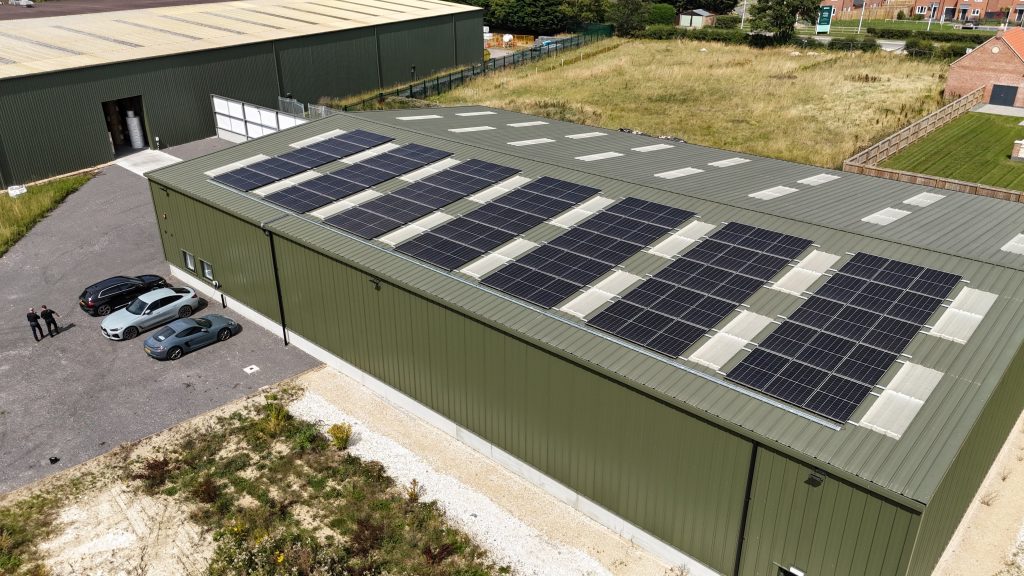
For businesses such as offices or warehouses, you may have a lot more roof space to utilise, and you may also have a flat roof where a rotating mount system can help you follow the sun’s movement throughout the day.
Ground-Mounted System Size
Where sufficient land is available, a ground-mounted system can offer more space for additional panels.
This can be helpful for homes or businesses with:
- High electricity consumption
- Electric heating or heat pumps
- One or more electric vehicles
- Workshops or outbuildings
- Plans to electrify more of the property
- A desire to increase energy independence
A larger array should still be designed around your actual and expected energy use. Installing more panels than you need will increase the initial cost, so bigger is not automatically better.
The aim should be to create a balanced system that reflects your consumption, available battery storage and long-term plans.
Is Ground-Mounted or Roof-Mounted Cheaper to Install?
Roof-mounted solar will generally have a lower initial installation cost when the roof is in good condition and straightforward to access.
The roof already provides the supporting structure, so the installation normally requires mounting rails, roof fixings, electrical equipment and cabling rather than a completely separate framework.
Ground-mounted solar usually costs more because the project may also require:
- A dedicated metal framework
- Ground screws, piles or ballasted foundations
- Ground surveys or additional design work
- Trenching
- Underground cable containment
- Longer cable runs
- Backfilling and ground restoration
- Fencing or protection in some locations
However, cost should not be considered in isolation.
Installing panels on an unsuitable roof simply because it appears cheaper could limit generation or create additional work later. Similarly, a ground-mounted array may make more financial sense if it allows you to install a system that better matches your electricity requirements.
Our MSC-certified team can compare and share the installation process and practical installation costs with the expected long-term generation and savings, supporting you in making an informed decision.
Which Is Easier to Maintain?
Ground-mounted solar panels are generally easier to access.
Because the array is installed at ground level, our technicians can inspect the panels, mounting structure and electrical components without requiring scaffolding or specialist roof-access equipment.
It may also be easier to spot:
- Dirt or debris
- Vegetation growing around the array
- Visible panel damage
- Loose cabling or components
- Signs of accidental impact
However, ground-level access can introduce other maintenance considerations. Grass and vegetation may need to be managed, and the array could be more exposed to animals, garden machinery, vehicles or debris.
Roof-mounted panels are safely positioned away from most day-to-day activity. They are also often installed at an angle that allows rainfall to wash away a proportion of surface dirt.
The disadvantage is that inspections, cleaning and repairs may be harder to carry out safely. You should never take unnecessary risks by climbing onto your roof. Professional solar panel maintenance is always the best option, as any repairs or maintenance can be carried out safely.
Which Solar Panel Option Has the Greatest Visual Impact on Your Property?
This largely comes down to your property and personal preferences.
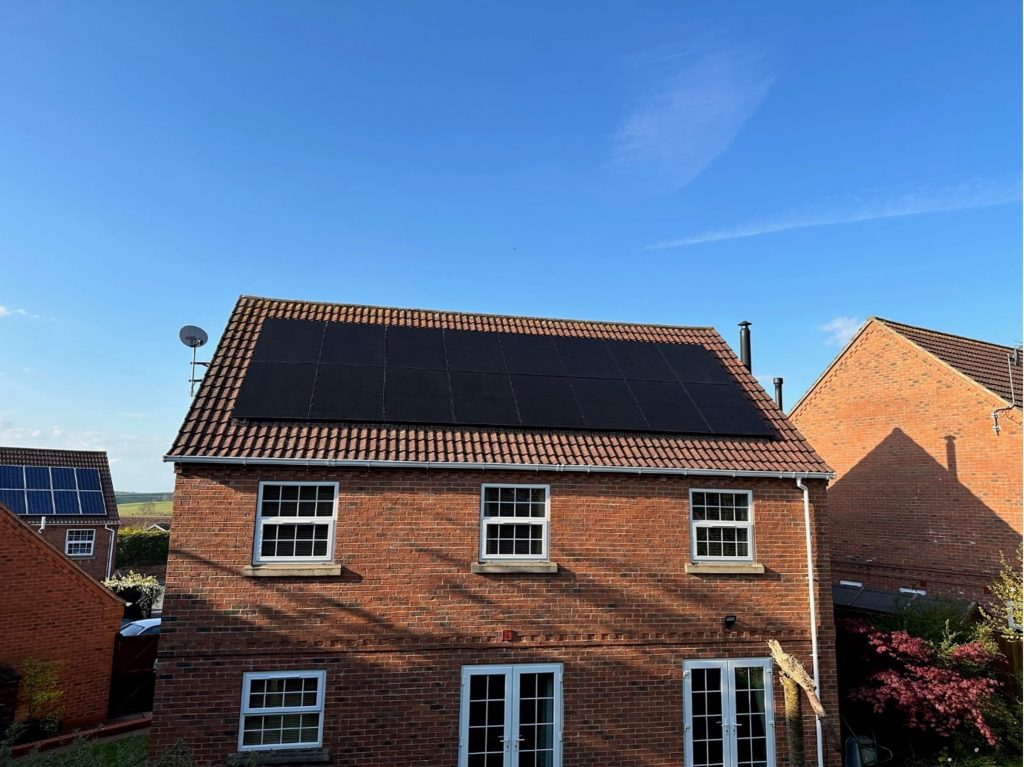
Roof-mounted panels become part of the appearance of the building. All-black panels can create a sleek and uniform finish, particularly when installed across dark tiles or slate. However, if you have a listed or historic building, bursting with quaint charm, you may be reluctant to give your roof a more modern appearance.
A ground-mounted array will occupy part of the surrounding land, but it can sometimes be positioned away from the main house or important views. Oftentimes, it can be concealed using trees or hedgerows too, ensuring the surrounding views are unimpacted.
The visual impact may be reduced through:
- Discreet positioning
- Sleek all-black panels
- Existing walls or outbuildings
- Carefully positioned fencing
- Native hedgerow screening
Any trees, hedges or planting must be planned carefully. Screening that looks suitable when first planted could eventually grow tall enough to cast shade over the panels.
What About Listed Buildings and Historic Homes?
Ground-mounted solar can be particularly useful for listed buildings and historically sensitive properties.
Installing panels on a historic roof may raise concerns about:
- Traditional roof tiles or slate
- Timber structures
- Historic building materials
- The character and appearance of the property
- Reversible alterations
A ground-mounted system may allow you to generate renewable electricity without attaching panels directly to the historic building.
The array can potentially be positioned away from the main property and screened to reduce its visual impact. Foundations such as ground screws or ballasted systems may also provide a more reversible option than permanent alterations to the building.
However, ground-mounted solar does not automatically avoid planning or heritage requirements.
The effect on the setting of the listed building, the surrounding landscape, underground archaeology, foundations and cable routes may all need to be considered. Planning permission or listed building consent may still be required, depending on the project.
Every listed or heritage property should therefore be assessed individually to ensure any set-ups will be in keeping with the look, as well as any legislation and local planning regulations.
Will Ground-Mounted Solar Take Up Too Much Land?
A ground-mounted solar array will occupy part of your garden, paddock or field, so it is important to consider how you currently use the space.
The area will no longer be suitable for:
- Tall crops
- New buildings
- Vehicle parking
- Regular vehicle access
- Activities that could damage the panels
However, the surrounding land does not always need to become completely unusable.
Depending on the design, it may be possible to create a low-growing wildflower area around the array, supporting bees, butterflies and other pollinators, supporting biodiversity in Lincolnshire and East Yorkshire.
On suitable rural sites, smaller livestock such as sheep may also be able to graze around the panels. The array would need appropriate ground clearance, secure cabling and protection for the electrical equipment.
Do Ground-Mounted Solar Panels Need Planning Permission?
Some stand-alone domestic solar installations may qualify as permitted development, provided they meet all relevant conditions and limitations.
However, many larger ground-mounted systems will require a formal planning application. Additional restrictions can also apply to:
- Listed buildings
- Conservation areas
- Scheduled monuments
- Designated land
- Installations close to boundaries
- Larger domestic arrays
Planning rules can depend on the size, height, position and location of the system, so you should not assume that permission will or will not be needed.
Your installer can provide the technical details needed for an application, but the requirements should always be confirmed with the relevant local planning authority.
Can Both Systems Be Combined with Battery Storage?
Yes. Both roof-mounted and ground-mounted solar systems can be combined with battery storage.
During the day, the solar panels generate electricity for your home. Any surplus electricity can then be charged into the battery rather than being exported immediately.
The stored electricity can be used:
- During the evening
- Overnight
- When solar generation is lower
- During more expensive peak-rate periods
- To support high-demand appliances
Battery storage can be particularly useful with a larger ground-mounted array, where the system may produce more electricity than the home can use immediately.
However, the battery should be sized around your generation and consumption patterns. Installing an excessively large battery does not automatically deliver better savings.
When Is Roof-Mounted Solar the Better Choice?
Roof-mounted solar could be the most suitable option when:
- Your roof has sufficient usable space
- The roof is in good structural condition
- The orientation supports effective generation
- There is limited shading
- You do not want to use garden or paddock space
- You want a more straightforward installation
- You are working with a more limited budget
- The proposed system will meet your electricity needs
For many homes, a roof-mounted system will provide the simplest and most cost-effective route into solar energy.
When Is Ground-Mounted Solar the Better Choice?
Ground-mounted solar may be more suitable when:
- Your roof faces an unsuitable direction
- The roof is heavily shaded
- Your roof has limited usable space
- The roof structure or materials are unsuitable
- You want to keep the main house free from panels
- You own a listed or historically sensitive property
- You have a large garden, paddock or field
- Your electricity requirements are higher than the roof can support
- You want more flexibility over the position of the array
- You are planning for heat pumps, EV charging or future energy growth
A ground-mounted system can also be a strong option for farms, smallholdings and rural homes where there is ample land but limited suitable roof space.
Ground-Mounted Solar in Practice: Our Hibaldstow Installation
A recent Lincs Renewables project in Hibaldstow, near Brigg, demonstrates when ground-mounted solar can provide the most practical solution.
The customer wanted to increase the energy independence of their rural domestic property and smallholding while keeping the main house completely free from solar panels.
Hibaldstow Project at a Glance
| Project Detail | Specification |
| Property | Rural home and smallholding |
| Solar Capacity | 10.2kWp |
| Panels | 20 × 510W Aiko Neostar panels |
| Layout | Two rows of ten |
| Inverter | 8kW SolaX IES hybrid inverter |
| Battery Storage | 15.3kWh |
| Mounting | Solarport ground-mounted structure |
| Additional Work | Trenching, cabling and groundworks |
Lincs Renewables managed the complete installation, from the mounting structure and groundworks to the underground cabling, electrical connections and final commissioning. For more information about the Hibaldstow project, check out the full case study.
Questions to Ask Before Choosing Your Solar System
Before deciding between ground-mounted and roof-mounted solar, consider the following questions:
- How much electricity do you currently use?
- Is your consumption likely to increase?
- Do you plan to install a heat pump or electric vehicle charger?
- How much usable roof space is available?
- What direction does the roof face?
- Is the roof shaded at key times of the day?
- Is the roof in a suitable structural condition?
- Do you have appropriate land for a ground-mounted array?
- How far would the array be from the property?
- Would trenching or planning permission be required?
- Do you want to include battery storage?
- How important is the appearance of the roof or surrounding land?
Contact us today to discuss your requirements and arrange a free no-obligation quote, our team of experts will clearly explain your options and help you find the perfect solution to any unanswered questions you may have.
Final Thoughts
When choosing between ground-mounted and roof-mounted solar panels, there is no universally right or wrong answer.
A roof-mounted system may provide the most practical and affordable choice when you have a suitable, unshaded roof with enough space to meet your energy needs.
A ground-mounted array may offer greater flexibility where roof space is limited, the property is historically sensitive, or you want to install a larger system using available land.
The most important thing is that your solar installation is designed around your property rather than selecting a system based solely on what works for somebody else.
At Lincs Renewables, we assess your available roof and ground space, electricity consumption, future requirements and budget before recommending a suitable solar and battery system.
Whether the best place for your panels is on your roof or in your paddock, our team can manage the complete process, from system design and mounting to groundworks, electrical installation, commissioning and aftercare.
Contact us today for honest, professional advice and a free, no-obligation quotation.
If you’d like to find out more: get in touch, call us on 01472 511487, or email us at info@lincsrenewables.co.uk.
Contact us today to discuss your requirements and arrange a free no-obligation quotation, or download your free solar guide!
Our team of MCS approved solar panel installers cover the following areas and more across Lincolnshire and East Yorkshire:
- Boston
- Caistor
- Cleethorpes
- Gainsborough
- Grantham
- Grimsby
- Horncastle
- Hull
- Lincoln
- Louth
- Market Rasen
- Newark
